Why We Aren’t Winning Globally: A Call for Black Economic Ambition Beyond Borders
By William D. Frazier
Good day, good people.
I want to discuss something that’s been weighing heavily on my mind: a gap in our strategy so wide it threatens to leave an entire generation economically behind. I’m speaking directly to our Black trade organizations, chambers of commerce, and economic advocacy groups. We need an honest conversation about our collective failure to engage seriously on the global stage, particularly with financial powerhouses like China.
Let me be clear, I applaud the relentless work done domestically. Fighting for fair lending practices, supporting Black-owned businesses in our communities, and advocating for policy changes are vital, necessary battles. We’ve seen progress. According to the U.S. Small Business Administration, the number of Black-owned employer businesses grew by 13.6% from 2017 to 2020, a faster rate than the national average. But here’s the hard truth that domestic policy wins are the floor, not the ceiling, of our economic potential. By focusing almost exclusively on the American landscape, we are playing a brilliant game of checkers while the rest of the world is playing chess on a board that spans continents.
The data underscores a painful disconnect. Black Americans represent a formidable consumer base, with a projected buying power of $1.98 trillion by 2024, according to the University of Georgia’s Selig Center for Economic Growth. This economic muscle is not translating into a proportional share of global trade ownership or influence. A 2021 report by the Brookings Institution highlighted that while minority-owned firms are overrepresented in exporting, they are severely underrepresented in high-value, sustained international trade relationships. We are often in the game, but not at the main tables where the terms are set and the largest deals are made.
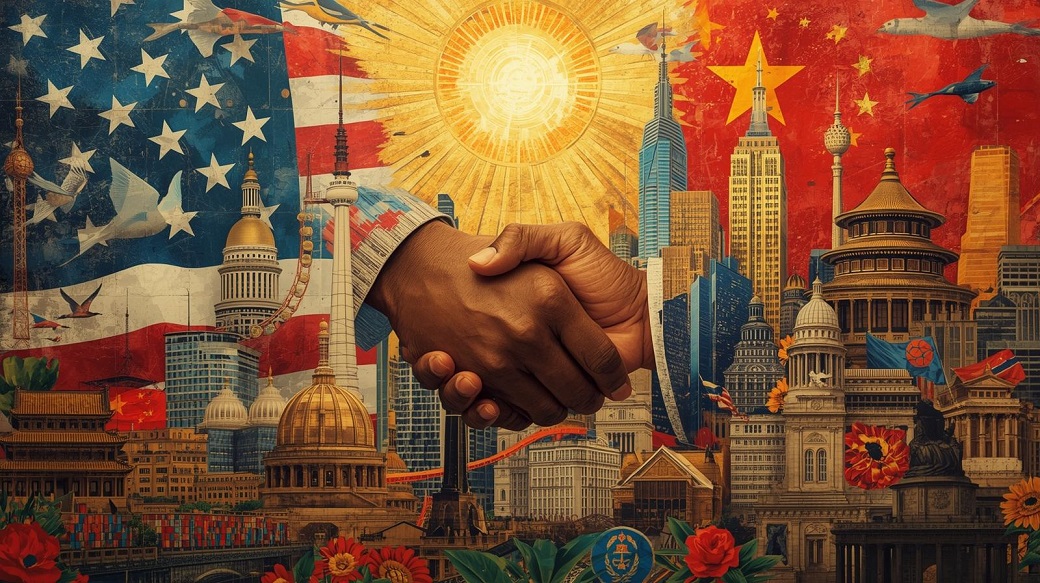
This is where my frustration peaks. I see organizations with “International” in their names replicating domestic programming overseas, like hosting mixers, signing memorandums of understanding (MOUs) that lead nowhere, and treating international trade as a photo opportunity rather than a hard-nosed economic negotiation. The world has moved on. Countries like China operate on a relationship and government-guided economy. Success isn’t just about showing up at a trade show; it’s about engaging with provincial bureaus of commerce, understanding the five-year plan, and building guanxi (关系), known as the network of relationships that facilitate business. As documented by the Council on Foreign Relations, China’s provincial and municipal governments have significant autonomy in economic planning and in attracting foreign investment. Who from our major economic organizations is sitting down with the Governor of Guangdong or the Mayor of Chengdu? The silence is deafening.
I hear the counterarguments like tariffs, political tensions, and complexity. But history teaches us that economic tides shift. The U.S.-China trade war and its tariffs, as analyzed by the Peterson Institute for International Economics (PIIE), have reshaped supply chains but have not decoupled the world’s two largest economies. They’ve leveled the playing field. Furthermore, China’s monumental Belt and Road Initiative (BRI), a global infrastructure strategy, has created corridors of trade and investment across Asia, Africa, and Europe. African nations, through forums such as the Forum on China-Africa Cooperation (FOCAC), have secured billions in infrastructure and development financing. Where is the coordinated, strategic engagement from our institutions to ensure Black American businesses have a stake in these new global flows of capital and goods? We are missing the plane, literally and figuratively.
This isn’t just about China. It’s about a mindset. It’s about Lagos, where Nigeria’s headquarters for the Africa Continental Free Trade Area (AfCFTA) aims to create the world’s largest single market. It’s about Dubai, a global logistics hub. It’s about Brazil and India. Our global diaspora is an asset we underutilize. The African Diaspora Network estimates that the diaspora contributes over $40 billion annually in remittances to Africa, providing a robust foundation for investment, not just aid.
So, what is the assignment? It’s time to step up, get on planes, and conduct substantive business.
- Move Beyond Symbolism to Substance: We need trade delegations with the weight of our collective economic ambition behind them. These aren’t tourism trips. They are missions with lawyers, sector-specific experts (in tech, agriculture, and manufacturing), and negotiators whose goal is to return with signed contracts and joint-venture agreements, not just souvenir flags.
- Build Government-to-Business Bridges: Our organizations must develop the expertise and language to engage directly with foreign government trade and investment agencies. This requires hiring staff with international trade degrees, Mandarin or other language skills, and a deep understanding of foreign regulatory environments.
- Leverage Our Unique Position: We must frame our engagement not as charity, but as smart economics. Black America represents a dynamic, innovative market and talent pool. We can offer partnerships that resonate with local cultures in growing global markets. A 2023 McKinsey & Company report on diversity and globalization noted that companies with diverse leadership are better positioned for global growth because they bring multiple perspectives to solving complex international challenges.
- Create a “Global Black Economic Playbook”: We need to stop transferring outdated domestic models. Let’s develop a new playbook that includes geopolitical risk analysis, international arbitration frameworks, and supply chain logistics for emerging markets, in partnership with schools of international relations and business at our HBCUs, to build this pipeline of talent.
The tariff wars will fade. Political cycles will change. But the gravitational pull of the global economy is constant. If we are not building the planes, trains, and ships of international commerce, and if we are not in those foreign boardrooms and government halls negotiating the terms of trade, then we will forever be consumers in a game where owners and dealmakers build the real wealth.
Our ancestors crossed oceans in chains. Their descendants must cross oceans in business class, armed with proposals, intellectual property, and an unshakable determination to claim our stake in the global economy. The mission is clear. The moment is now. Let’s go.
The question isn’t whether we can do it. It’s whether we have the will to board the plane.